Most slab leak calls I receive come six to twelve weeks after the problem started. By that point, the water bill has spiked two to three times, the foundation has absorbed weeks of sustained saturation, and what could have been a minor repair is now a major one because the soil under the slab has shifted.
The leak itself does not cause the call. The customer’s tolerance for an unexplained bill does.
Why Slab Leaks Are Common in North Texas
The Blackland Prairie clay soil under most of Collin County and the greater Dallas area expands when wet and contracts in drought. If you live in a neighborhood with slab-foundation construction - which describes the majority of North Texas residential homes - your supply lines are embedded in concrete that moves with the soil.
In a normal year, this cycle happens once or twice: spring rain swells the clay, summer drought contracts it. Pipes flex with that movement. Over 15-20 years, the flexing stresses pipe fittings and elbows - the rigid connection points - until one cracks.
The 2021 winter storm Uri added a different stress. Pipes in attic spaces and exterior walls that had never experienced hard-freeze conditions burst. Many of those bursts were visibly repaired. But some caused slow seeps that went undetected, particularly in supply lines embedded in the slab or routed through unconditioned attic crawl spaces. In 2024 and 2025, we found several slab leaks that traced directly to underslab supply lines stressed during Uri.
The Signs Homeowners Miss
Water bill increase with no behavior change. This is the most reliable early indicator and the one that is most often rationalized away. If your bill went up noticeably and nothing changed in how your household uses water, you have an unexplained flow somewhere. A slab leak will show up here weeks before any other symptom.
A floor section that is warm underfoot. Hot water slab leaks are easier to detect because the heat transfers through concrete. If a section of your tile floor feels noticeably warm - particularly in a hallway, utility room, or area of the house away from heating vents - check whether it is a consistent zone or varies with time of day. A hot water slab leak is warmer when the water heater has recently fired and cooler in the morning when the tank cooled overnight.
Running water sounds with all fixtures off. Stand in a quiet room with every faucet, appliance, and irrigation zone off. Listen near the floor. A slab leak under pressure makes a faint rushing or hissing sound that conducts through the slab. This is not always audible, but when it is, it is diagnostic.
The meter test. Turn off every fixture and appliance. Go to the water meter - the access cover is usually near the street in a small box - and watch the indicator dial. If it is moving, water is flowing somewhere in your system right now. This is the fastest way to confirm an active leak without calling anyone.
Foundation cracking near the floor. This is a late-stage symptom. If you are seeing cracks in flooring, baseboard separation, or interior wall cracks near the floor level, the leak has been saturating the clay for months and the foundation has already moved. At this point, you need a plumber and likely a foundation company involved.
What Happens If You Wait
Clay soil absorbs water and swells. When a hot water supply line leaks under a slab, the area directly beneath the leak becomes saturated faster than the surrounding soil. This uneven saturation causes the slab to lift on the wet side and settle on the dry side - the same mechanism as active foundation movement.
A slab leak repaired within the first four weeks of occurrence rarely causes measurable foundation damage. A slab leak that has been active for three months may require a foundation company to assess differential movement, which adds cost and complexity to the repair timeline.
What We Do When We Arrive
Pinpointing the leak comes before any repair. Locating the exact spot is handled by a detection specialist we work with, who identifies whether the leak is on the hot or cold side and marks the highest-intensity point.
With the leak located to within a foot or so, we reach the pipe by tunneling under the foundation from outside - keeping your floors and tile intact instead of jackhammering through the living space.
After the repair, we pressure-test the line before patching concrete. You get a written confirmation that the repair holds to 90 PSI before we close the floor.
FAQ
Frequently Asked Questions
More Plumbing Guides
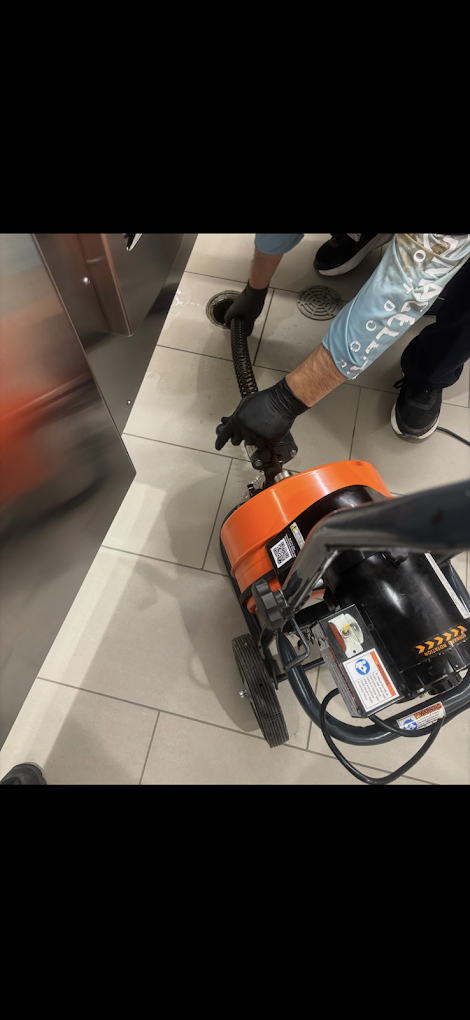
Why Does My Drain Keep Clogging? Common Causes and What to Do
A drain that clogs again right after you clear it usually means buildup is still on the pipe walls, the restriction is farther downstream, roots are in the sewer line, or the pipe itself is damaged. Here is how to tell which one you are dealing with — and when it is time to call a plumber.
Read article
Why North Texas Hard Water Kills Water Heaters Faster
Dallas-area water averages 14-18 grains per gallon of hardness. That level of mineral content depletes water heater anode rods in 3-4 years instead of 6, coats heating elements with scale, and shortens expected service life by 2-4 years. Here is what that means for your maintenance schedule.
Read articleSchedule a Visit
We respond within 2 hours during business hours
Thanks! We'll be in touch within 2 hours during business hours.
Something went wrong. Please call 469-459-2500 directly.